Local Organizing Committee
LOCAL ORGANIZING COMMITTEE
– Management of the current edition of BraYn Conference –
SOON AVAILABLE
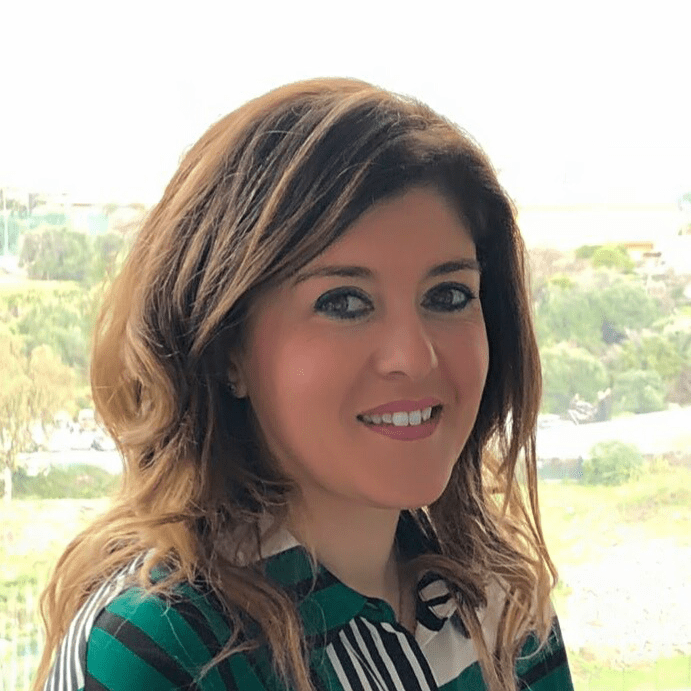
Giovanna Calabrese
(Tap/Click on the name to see the bio sketch)
Giovanna Calabrese
Department of Chemical, Biological, Pharmaceutical and Environmental Sciences (ChiBioFarAm), University of Messina, Italy •
Giovanna Calabrese is an Associate Professor of Physiology at the University of Messina. She obtained a PhD in Medical Embryology, Pathology, and Experimental Hematology from the University of Catania. Her previous roles include research positions at the DIBIT–San Raffaele Scientific Institute in Milan, at IOM Ricerca, and at the Universities of Catania and Messina.
Her research focuses on the molecular and cellular mechanisms of tissue repair, with expertise in mesenchymal stem cells, 3D biomimetic scaffolds, and signaling pathways involved in bone and neural regeneration, cancer, and inflammation. She has extensive experience with in vitro and in vivo models applied to neurodegeneration, osteochondral regeneration, oncology, and inflammatory diseases. She is actively involved in national, international, and European research projects and collaborations. Author of numerous peer‑reviewed publications, she is recognized for her interdisciplinary contributions to regenerative medicine.
Alessandra Armeli
(Tap/Click on the name to see the bio sketch)
Alessandra Armeli
University of Messina (Italy) •
Alessandra Armeli obtained her degree in Biotechnology from the University of Messina in 2025 and currently collaborates in the Laboratory of Microbiological and Cellular Biotechnologies at the Department of Chemical, Biological, Pharmaceutical and Environmental Sciences (ChiBioFarAm), UniME. Her research focuses on regenerative medicine and neural tissue engineering, with particular interest in developing innovative biotechnological strategies to promote functional recovery in neurological disorders. She investigates how biomaterials interact with the neural microenvironment, aiming to enhance tissue repair and support neural regeneration through advanced bioengineered approaches.
Serena Munaò
(Tap/Click on the name to see the bio sketch)
Serena Munaò
University of Messina (Italy) •
Serena Munaò obtained her M.Sc. degree in Medical Biotechnology from the University of Messina in 2026, where her research focused on neural regeneration and the use of biocompatible and conductive materials to promote nerve repair. She is currently working at the Department of Chemical, Biological, Pharmaceutical, and Environmental Sciences (ChiBioFarAm), UniME, contributing to innovative projects that integrate advanced biomaterials with regenerative biotechnologies. Her work aims to develop novel therapeutic strategies in neuroscience by exploring how engineered materials can support neural repair and functional recovery.
Desirèe Bonfiglio
(Tap/Click on the name to see the bio sketch)
Desirèe Bonfiglio
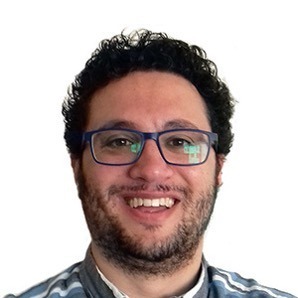
University of Messina (Italy) • Desirèe Bonfiglio obtained her degree in Biotechnology from the University of Messina and currently collaborates in the Laboratory of Microbiological and Cellular Biotechnologies at the Department of Chemical, Biological, Pharmaceutical and Environmental Sciences (ChiBioFarAm), UniME. Her research focuses on biotechnological approaches for neurological recovery, with particular interest in tissue engineering strategies that support neural repair. She studies how biomaterials can modulate the neural microenvironment to promote regeneration, aiming to integrate material science and neuroscience in the development of innovative and personalized therapies for neuro‑rehabilitation.
Nunzio Iraci
(Tap/Click on the name to see the bio sketch)
Nunzio Iraci
Department of Biomedical and Biotechnological Sciences (BIOMETEC), University of Catania, Italy • Nunzio Iraci graduated with a M.Sc in Pharmaceutical Biotechnology (2005) and a Ph.D. in Cellular Biology and Physiology (2009), both from the University of Bologna, Italy. NI moved to the Dept. of Clinical Neurosciences at the University of Cambridge (UK) in 2011 where he contributed to reveal a mechanism of cell-to-cell communication by which neural stem cells may signal with the microenvironment via EVs, in the context of neurodegenerative diseases. He is currently Associate Professor of Molecular Biology at BIOMETEC, University of Catania. His research interests include in-depth characterization of EV-mediated intercellular signalling in the context of neurodegenerative disorders.
Loredana Leggio
(Tap/Click on the name to see the bio sketch)
Loredana Leggio
University of Catania (Italy) •
Loredana Leggio obtained her Ph.D. in Geological, Biological, and Environmental Sciences from the University of Catania (uniCT) in 2017. As a postdoctoral fellow until 2023, she contributed to the study of the neuroprotective potential of astrocyte-derived extracellular vesicles (EVs) in the context of Parkinson’s disease. Currently, she is a fixed-term Assistant Professor (RTDA) of Molecular Biology at the Dept. of Biomedical and Biotechnological Sciences, uniCT, focusing on EV–mediated cell-to-cell communication and biomarker discovery in chronic degenerative disorders.
Marco Falcone
(Tap/Click on the name to see the bio sketch)
Marco Falcone
University of Catania (Italy) • Marco Falcone graduated with a M.Sc in Medical Biotechnology (2024) from the University of Catania, Italy. His research focuses on neuroprotective mechanisms in Parkinson’s disease, using in vitro and zebrafish models to assess behavioral and neurobiological outcomes. As a recipient of an e-COST STSM grant, he moved to the University of Bergen (Norway), where he contributed to study in vivo astrocyte–neuron communication in the brain. He is currently a research fellow at the Dept. of Biomedical and Biotechnological Sciences (uniCT), investigating the muscle-brain axis in neurodegenerative disorders.
Maria Cullurà
(Tap/Click on the name to see the bio sketch)
Maria Cullurà
University of Catania (Italy) •
Maria Cullurà obtained her M.Sc. in Medical Biotechnology at the University of Catania (uniCT) in 2025, studying the contribution of extracellular vesicles in the context of astrocyte-neuron communication in Parkinson’s disease. She moved to the University of Messina for a fellowship focusing on biomarker discovery in chronic degenerative disorders. She is currently working at the Dept. of Biomedical and Biotechnological Sciences (uniCT) where she collaborates on projects exploring mitochondrial dynamics in neurodegeneration.
Giuseppe Giglia
(Tap/Click on the name to see the bio sketch)
Giuseppe Giglia
Department of Biomedicine, Neuroscience and Advanced Diagnostics (Bi.N.D.), University of Palermo, Italy •
Giuseppe Giglia is a neurologist and cognitive neuroscientist, currently Associate Professor of Physiology at the University of Palermo. He received his medical degree and postgraduate training in neurology in Italy, developing early on a strong interest in the neural bases of perception, action, and spatial cognition. His research activity focuses on cognitive and translational neuroscience, with particular emphasis on embodied cognition, visuospatial attention, multisensory integration, and non-invasive brain stimulation (TMS and tDCS) in both healthy subjects and neurological patients. He has contributed to experimental and clinical studies on neglect, body representation, sensory-motor coupling, and neuroplasticity, often integrating behavioral paradigms with neurophysiological and neuromodulation techniques. In recent years, his work has increasingly incorporated immersive technologies, including virtual and augmented reality, for both research and educational purposes, exploring their potential in neuroscience training and rehabilitation. He is actively involved in national and European research projects and holds institutional roles in doctoral training and public engagement within the University of Palermo.
Giuditta Gambino
(Tap/Click on the name to see the bio sketch)
Giuditta Gambino
University of Palermo (Italy) •
Giuditta Gambino is an Associate Professor in Human Physiology at the University of Palermo. She obtained her MSc in Pharmacy with honors in 2013 and her PhD in Biomedicine and Neurosciences in 2017 at the University of Palermo, where her doctoral research focused on the role of nitric oxide signaling and the endocannabinoid system in neuronal excitability and epileptic phenomena. Her research activity is centered on experimental and translational neurophysiology, with particular emphasis on synaptic transmission, cortical excitability, neuromodulation, and the interaction between metabolic factors, nutraceuticals, and brain function. She combines electrophysiological, behavioral, and non-invasive brain stimulation approaches in both animal models and humans. She has authored numerous publications in international peer-reviewed journals and is actively involved in national and international research projects and collaborations. Alongside her research, she carries out extensive teaching activities in physiology for undergraduate, graduate, and doctoral programs at the University of Palermo, and is a member of the doctoral board in Biomedicine, Neurosciences and Advanced Diagnostics.
Fabrizio Di Giovanni
(Tap/Click on the name to see the bio sketch)
Fabrizio Di Giovanni
University of Palermo (Italy) •
Fabrizio Di Giovanni is a medical doctor trained at the University of Palermo and a third-year Ph.D. candidate in Neuroscience at the same institution. His research interests lie within cognitive neuroscience, with a particular focus on neurolinguistics and neuroaesthetics, investigating language, music, cinema and visual arts through the lens of embodied and grounded cognition theories. His work integrates behavioral paradigms with non-invasive brain stimulation techniques (tDCS and TMS), alongside electrophysiological measures, including EEG and motor-evoked potentials (MEPs), to explore the neural mechanisms underlying perception, sensory-motor coupling, action and meaning-making. Drawing on a multidisciplinary background that includes formal training in cinema at the Centro Sperimentale di Cinematografia and electronic music at the Conservatory, as well as professional experience in the audiovisual field, he translates artistic and technical expertise into experimental research frameworks. His current activity aims to bridge cognitive neuroscience, aesthetics, linguistics and neuromodulation, contributing to an integrative understanding of how artistic experiences and language are embodied, processed and modulated at the neural level.